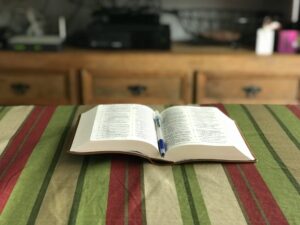




If you are looking for ideas on what to do in 2026, here’s one—read. Reading, in many ways, is a lost art in today’s society. People are more inclined to watch videos than they are to read books. According to the Canadian Leisure & Reading Study 2024, which surveys people who have read at least one book in the previous year, respondents displayed that watching videos is the most popular way that they spend their leisure time on a weekly basis; reading is listed at number eight. And this statistic is of people who read! But if all one does is watch videos, one misses out on the benefits of reading. Humans benefit from reading, and Christians in particular should be people who read.
Reading, thinking, and writing are fundamental practices of a well-ordered mind, and they are increasingly neglected. Why read when you can watch and listen? Why think when a media influencer can tell you what to think? And why write when ChatGPT can do it for you? Our neglect of these three practices not only leads us to be lazy, but it also leads us to become apathetic and uncritical. We need to learn how to think again, and reading is an integral part of this pursuit.
Many young adults I interact with are inclined to listen to YouTubers and podcasters for theology. While there are certainly benefits to this, when it is done in isolation, it can lead one to become passive. Instead of thinking through theological issues for oneself, you depend on others to tell you what to think. And instead of doing the reading for yourself, you listen to others who have (supposedly, at least), done the reading for you. This leads to a lack of critical thinking and a dependency on others for learning about theology. We are not doing the hard work of thinking through problems on our own. Instead, we become dependent on other people to tell us what and how to think.
When we read books, especially difficult ones, we are confronted with complex ideas that cannot be simplified. You cannot watch a ten-minute video and become an expert; you need to read—one word at a time, slowly, carefully—and engage with the ideas on their own terms. By reading, you are interacting with other people’s thoughts, and you need to critically engage with them to see if they are sound or not, if they are biblical or not.
Instead of depending on other people to do the reading for you, what if you did the reading yourself?
So let us say you want to get into reading theology in the new year. What might this look like?
Read a minimum of 10 pages a day, or 50 pages a week.
I find that page goals are better than book goals, as not all books are the same size. It can be tempting to want to read a bunch of small books a year, but in doing so, we neglect the larger books that take time to read through. So, what if you read 50 pages a week (10 pages a day 5 days a week)? This would be about 20–30 minutes of reading a day depending on one’s speed of reading (and it is better to read slowly and thoughtfully than quickly and unattentively). By doing this, you could get through at least 10 books a year.
Focus on a variety of non-fiction books that challenge you.
Reading fiction is important, but that is not what I have in mind for this challenge. Read (or listen) to fiction at a different time. For this 50 pages a week goal, focus on reading non-fiction books that push you intellectually and theologically. These should not be “how to” books or “self improvement” books. Instead, read books that deal with the classical theological disciplines: biblical theology, church history, and systematic theology. If you are reading 10 books a year, you can read at least 3 books from each category.
Read classics
It is tempting to only read new books, but it is wise to read books that have stood the test of time. Read Augustine’s Confessions, Calvin’s Institutes, Stott’s The Cross of Christ. Read through them carefully and thoughtfully. Take notes. Talk to others about them. Pray as you reflect on them. These books have shaped Christians in the past, and they can continue to shape us into the future.
Read in community
If you are looking to read more in the new year, you should look to do it with others. You can dedicate 30 minutes a day in your home for you and your family to read at the same time. You can create a reading group where you go through a book together and meet once a month to discuss it. You can talk to your spouse about what you are reading and process the ideas together. You can meet with your pastor and ask to talk about some of the ideas you are reading about. Talking with other people refines the ideas you are learning about and helps you articulate them in clear and concise ways.
Read as a spiritual discipline
Reading is at the heart of the Christian life. We all know we need to read the Bible. But it is also so beneficial to read books that edify and challenge us spiritually as well. If you have disciplines of Bible reading, prayer, and rest in your life, why not add the spiritual discipline of reading books of theology? This form of reading will help you love the Lord and those around you. It will help you engage with Christians from different backgrounds, perspectives, and time periods. And it will challenge you to think deeply.
Reading Theology in 2026
My challenge is to spend roughly thirty minutes a day in reading, five days a week, in 2026. If you do not think you have time for this challenge, then check your screen time on your phone. I am sure you will find some time you can dedicate toward a better cause.
Series Recommendations
Looking for some books to start with? Here are some series with many books to choose from.
New Studies in Biblical Theology (InterVarsity Press)
Theologians on the Christian Life Series (Crossway)