





Human beings are historical beings. Our lives are inextricably tied to the past, our own immediate past obviously but also that of other humans.
As V. Gilbert Beers, a past editor of Christianity Today, noted in a 1982 editorial, “We owe much to many whom we have never met.” Beers goes on:
And as the seventeenth-century polymath Isaac Newton (1642/3‒1726/7) said in a letter to his scientific rival Robert Hooke (1635‒1703): “If I have seen further it is by standing upon the shoulders of giants.”2
The study of church history informs us about our predecessors in the faith, those who have helped shape our Christian communities and thus make us what we are. Such study builds humility and modesty into our lives, and so can exercise a sanctifying influence upon us.
A significant part of my conversion was the faithful witness of a Baptist community in Hamilton, Ontario—Stanley Avenue Baptist Church—and of its pastor at the time, Bruce Woods (1931‒2022).3 I knew nothing of the history of this Christian community when I first walked through the doors of this church in the autumn of 1973. But over the years that I attended Stanley Avenue I began to learn her history and appreciate deeply the witness of many who were long in glory when I first came to the church.
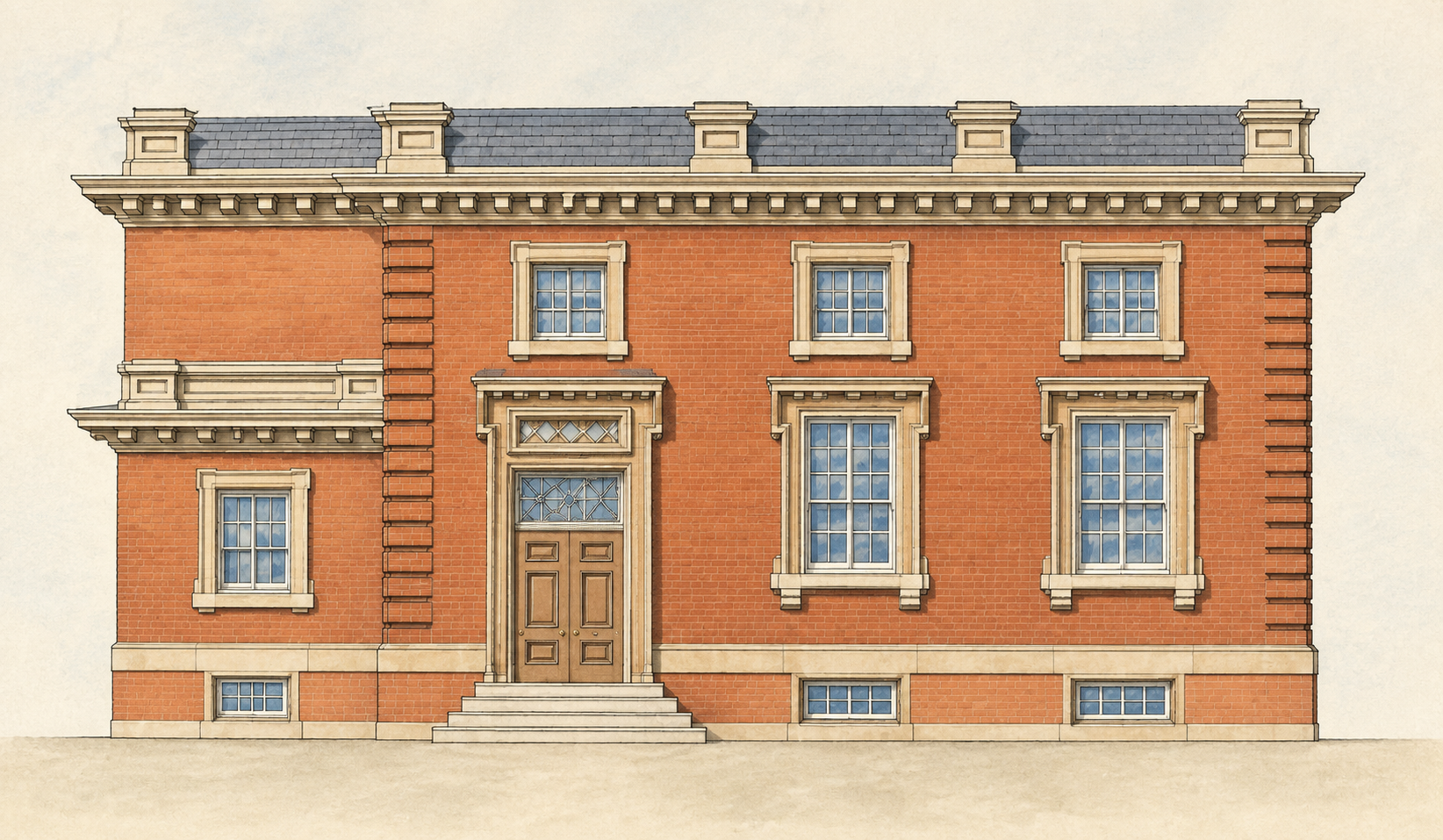
The church originated in a Sunday School that was started in 1875 by Palemon Lewis Scriven, an engraver by trade, and at the time a member of James Street Baptist Church in downtown Hamilton. He and his family moved to Hunter Street in 1872, and, in his words, he became concerned about the “perishing souls” in that area of the city and about the fact that there was no Baptist witness there. He and his wife took a survey of the area to see if parents would consent to send their children to a Sunday School. A room was found in a private home in the area and on June 6, 1875, the Sunday School began with 22 children in attendance.
Within a year there were 77 children attending. This Sunday School had ceased to function by 1879, though, due to the fact that the room being rented was no longer available and no other accommodation could be found. But in 1884, under the leadership of William Henry Midgely, Herkimer Baptist Mission was born, being built on Scriven’s Sunday School work. Finally, this mission was formally recognized as an independent church on December 17, 1889.
When Scriven came to write up the story of the church’s origins a number of years later, he asked, “who shall estimate the ultimate results” of the work? Who indeed? Over the years, under a succession of godly pastors, the work flourished, and hundreds were saved.
The church was a lighthouse, shining out the light of the gospel of the Lord Jesus Christ so that, among a multitude of sinners saved, this author was one!
All this, humanly speaking, because a man by the name of Palemon Lewis Scriven and his wife moved to Hunter Street and became exercised in their souls that men and women and children in the area were without Christ and without hope.
1 Gilbert Beers, “Giving Thanks for Predecessors,” Christianity Today 26.19 (November 26, 1982): 12.
2 Isaac Newton, Letter to Robert Hooke, February 5, 1675/6, in The Correspondence of Isaac Newton. Volume I: 1661–1675, ed. H. W. Turnbull (Cambridge: Cambridge University Press for the Royal Society,1959), 416. This aphorism goes back at least to the twelfth century. See “Standing on the shoulders of giants,” Wikipedia (https://en.wikipedia.org/wiki/Standing_on_the_shoulders_of_giants; accessed October 1, 2026).
3 This church building is now the home of Blessings Christian Church, a Canadian Reformed congregation. See https://blessingshamilton.ca/about/.