





1700 years ago, a council of bishops met in the city of Nicaea, summoned by Emperor Constantine to discuss and settle numerous issues. The most important issue on the table was the doctrine of God. Arius (250-336), an influential leader in Alexandria, taught that Jesus, the Son, was created and not equal to the Father. Arius popularised the tune about Jesus, “There once was a time when he was not.” At the Council of Nicaea in 325 AD, Arius’s teaching was weighed next to Scripture, and he was condemned as a heretic. His theology was outside the bounds of Christian doctrine.
The council drafted a creed, which was refined at the council of Constantinople in 381, that defined the boundaries and clarified the biblical teaching that the One God we worship is the triune God, Father, Son, and Holy Spirit. One God in three persons. The theology, worship, and witness of the Church have been helpfully stewarded by the biblical boundaries we confess in the Nicene creed ever since.
This Advent, my church incorporated the Nicene Creed in our liturgy. Every Sunday, we recited and sang the creed together. Why would we do this at an evangelical Baptist church near Toronto in 2025? It is not out of nostalgia for 325 but for the sake of worship and witness.
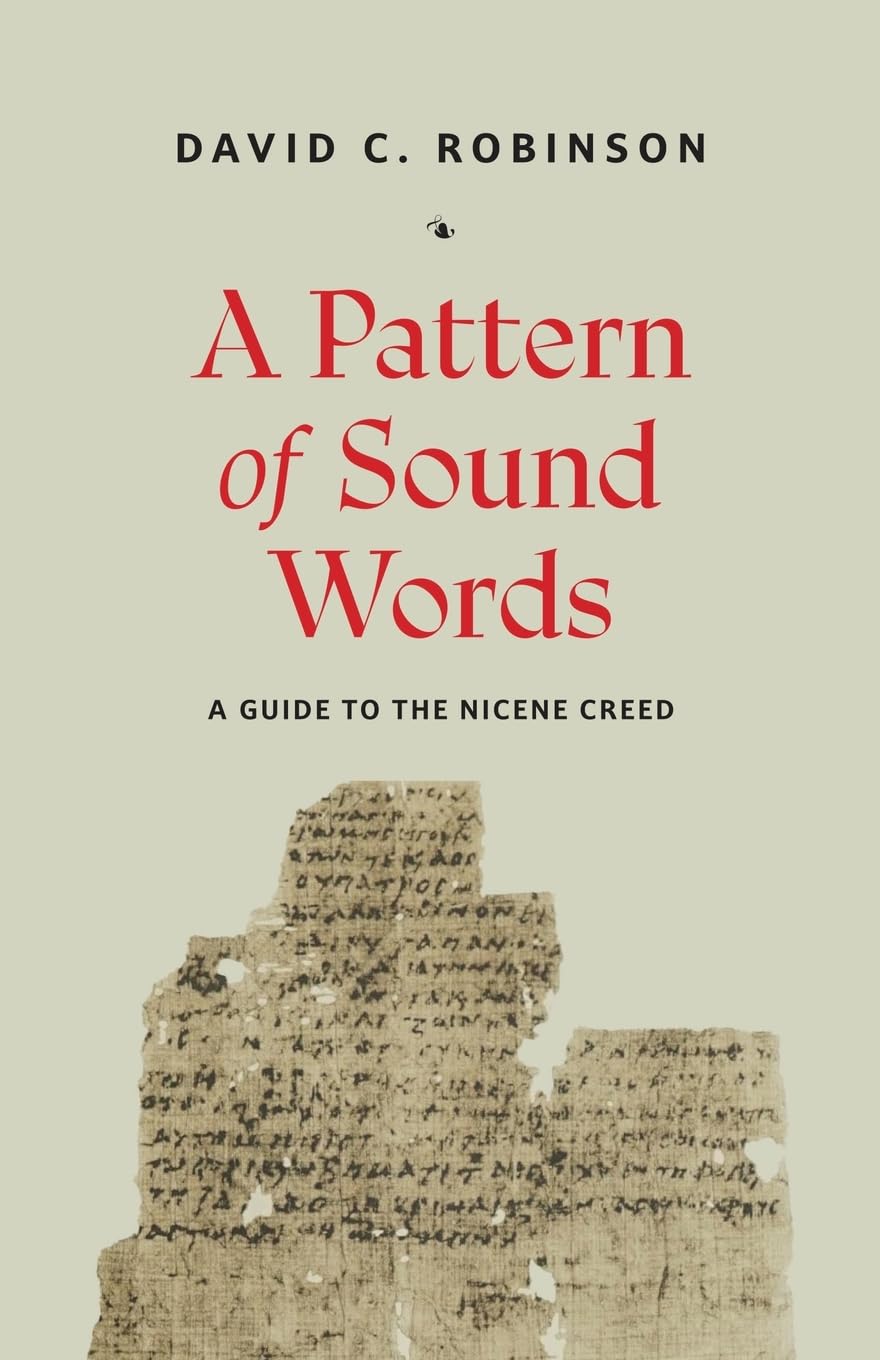
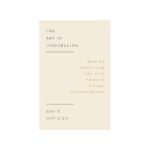
A Pattern of Sound Words: A Guide to the Nicene Creed
David Robinson
Seventeen hundred years ago, a council of bishops met in the city of Nicaea, summoned by Emperor Constantine to discuss and settle numerous issues. The most important issue on the table was the doctrine of God. Arius (250-336), an influential leader in Alexandria, taught that Jesus, the Son, was created and not equal to the Father. Arius popularised the tune about Jesus, “There once was a time when he was not.” At the Council of Nicaea in 325 AD, Arius’s teaching was weighed next to Scripture, and he was condemned as a heretic. His theology was outside the bounds of Christian doctrine.
David Robinson’s recent book A Pattern of Sound Words: A Guide to the Nicene Creed, where he walks through the creed phrase by phrase, shows how confessing the creed guards and deepens Christian worship and witness.
David Robinson’s recent book A Pattern of Sound Words: A Guide to the Nicene Creed, where he walks through the creed phrase by phrase, shows how confessing the creed guards and deepens Christian worship and witness.
Nicaea and Scripture
Perhaps some people are unsure about confessing creeds, seeing it as threatening the functional authority of the Bible? Robinson helps alleviate this uncertainty. He says, “Creeds and confessions do not undermine the sufficiency, inerrancy, and authority of God’s Word. On the contrary, they acknowledge and affirm God’s Word. The Nicene Creed follows the order and continuity of the Scriptures and gives us the basic structure and content of biblical doctrine” (p. 13). The Nicene Creed is not set beside the Scriptures. Instead, the creed gives a succinct summary of the Bible’s teaching about God and salvation. The creed shows us, as Gregory of Nazianzus says, “the bounds of reverence” (p. 24).
The creed confesses what is clearly affirmed in Scripture. The only term not found in the Bible that the creed uses is “homoousios” which is found in the statement about the Son: “the same being with the Father.” This line was included to specifically rule out Arianism. Arius and his followers believed Jesus was from God and like God, but not “of the same being.” Robinson explains, “The term homoousios guards the integrity of our worship” (p. 41). The creed doesn’t simply say the Son is “God from God” but “true God from true God.” By expressing the essential unity, not merely similarity or privilege but unity of being, the creed protects us from errors in worship. It guards against Arius’s claim that the Son is not God, and it guards us from collapsing and confusing the Father and the Son. The one God who is worshipped is the triune God, the Father, Son and Spirit (1 Cor 8:6).
Worship and Witness
Christians worship the one God who is triune. Why is that not a contradiction? Oneness describes God’s being, and triune describes eternal relations in the trinity. As the creed says, the Father is “the Almighty, Maker of heaven and earth,” the Son is “eternally begotten from the Father,” and the Spirit “proceeds from the Father.”[1]Robinson helpfully articulates how the creed summarises the unity and triune relations of God.
The unity and oneness of God has its source in the Father’s being, which he shares with the Son and the Spirit. Scripture reveals that the Son is ‘the only-begotten from the Father’ (John 1:14) and the Spirit “proceeds from the Father’ (John 15:26). The Spirit is the Spirit because he proceeds from the Father. The Son is the Son because he is begotten from the Father. The Father is the Father because he has begotten the Son (p. 77).
Christian’s sometimes have an instinct to avoid reflecting on God’s triunity. Isn’t it just theological hair-splitting that distracts us from practical Christian living? Admittedly, these are deep waters. However, if eternal life is knowing God (John 17:1-3) and we behold God in the face of Jesus Christ through the witness of the Spirit (2 Cor 3:14-18), then the trinity of God is essential and practical. Our worship is distinctly triune because our salvation is by the grace of the triune God (Eph 1:3-14). “Following the biblical pattern,” Robinson says, “our language of prayer, praise, doxology, and benediction is trinitarian. Here we see a relationship between doctrine and worship, liturgy and creed. Right theology and right worship go together” (p. 80).
The Nicene Creed is a theological and a soteriological confession (p 43). The creed confesses the God we worship and the gospel of salvation.
Salvation is not found in transcending our bodies through knowledge or enhancing ourselves through technology. Salvation is in Christ alone. The Son who “for us and our salvation” became human. As Paul says, “This saying is trustworthy and deserving of full acceptance: ‘Christ Jesus came into the world to save sinners’—and I am the worst of them” (1 Tim 1:15). Jesus did not simply appear to be human; we confess his full humanity. Therefore, “he is able to save completely those who come to God through him, since he always lives to intercede for them” (Heb 7:25). Robinson says, “Christ is not simply our representative in heaven by name of office, but by union. We are members of his body” (p. 63). Confessing that the Son, through the incarnation, assumed full humanity is part of confessing the glorious gospel of salvation by grace through faith in Christ alone.
The creed is also a historical confession. The mention of Pontius Pilate “reminds us that our faith is grounded in history” (p. 52). If Jesus’s life, death, and resurrection are merely metaphors inspiring moral goodness, our faith is in vain. Rather, the Nicene creed guards our witness. “We believe in one Lord Jesus Christ, the only-begotten Son of God, eternally begotten from the Father, Light from Light, true God from God, who for us men and for our salvation, came down from heaven, became man, and was crucified for us under Pontius Pilate. This happened, at a particular time and place, under the rule and decree of Pontius Pilate” (p. 52)
We confess what we believe. So don’t just remember the Nicene Creed. For worship and witness, confess the creed.
[1] Two traditions emerged around this line. The Eastern tradition retained the original wording while the Western tradition includes the line “and the Son” after the Spirit’s procession from the Father. This was one of the theological reasons for the great schism in 1054, that remains between the Eastern Orthodox and the Roman Catholic Church. Robinson summarizes arguments in favour and against this addition well (pp.77-80).