





I like stories about heroes who fight for what is right with integrity and virtue, defeating the villains fairly and decisively without sinking to the level of the evil they oppose. I also like true stories from history. Unfortunately, I have discovered that these two kinds of stories rarely intersect. History, even Christian history, is full of men and women who accomplish great and important tasks, make great discoveries, do great things for God, all while being deeply flawed and sinful.
Of course, Christians should be the last people to be surprised by this reality. If we have a proper understanding of the gospel, we should expect that human depravity and sin will taint the great deeds of even the best of us and that the only true hero in human history is Jesus. And yet, it is still all too easy for us to take a simplistic view of history and paint historical figures as heroes or villains, either ignoring or overemphasizing certain aspects of the truth in order to fit our neat and tidy narrative.
One important Christian figure who has been the victim of this sort of historical mistreatment is Cyril of Alexandria. Cyril’s importance to Christian history and theology is matched only by the controversy that surrounds his life. He has often been painted as a tyrant and a bully, using political maneuvering and manipulating to have his theological rivals condemned as heretics, and even involved in the brutal murder of a woman. Daniel Hames, in his accessible and helpful book, Cyril of Alexandria: His Life and Impact, engages with some of the best scholarship available to cut through the rhetoric and paint a fair (and incredibly interesting) picture of Cyril’s life and theology. Cyril is neither villain nor hero, but rather a flawed, sinful man who accomplished great things for God, particularly in protecting and honing the Church’s doctrine of Christ.

Cyril of Alexandria: His Life and Impact
Daniel Hames
Cyril the Leader
Cyril was born in Egypt toward the end of the fourth century (p. 17) and became the Bishop of Alexandria in 412, when he was in his mid-30s (p. 33). He ministered in this role for more than three decades until his death in AD 444 (p. 143). In the fifth century, the Roman Empire was officially Christian, and Alexandria was one of the most important cities in the Empire, meaning that Cyril was a powerful man. While 250 years earlier, bishops like Irenaeus faced brutal persecution at the hands of the Roman government, Cyril’s authority in Alexandria rivalled that of the Roman government. Indeed, Cyril’s early years as bishop were marked with regular clashes with the Prefect of Alexandria, a man named Orestes (p. 36-37). Cyril even went so far as to bypass Orestes’ peace-keeping authority, taking matters into his own hands. When a group of Jewish Alexandrians violently attacked Christians, Cyril incited his people to take vengeance rather than bringing the matter to Orestes (p. 37-38).
Cyril’s feud with Orestes was so fiery that it led to Cyril’s implication in the brutal murder of a woman named Hypatia. Hypatia was a pagan philosopher and popular teacher who was influential with those in Alexandria who still followed the old Roman and Greek pagan ways. When rumours began to spread that Hypatia was in an illicit relationship with Cyril’s rival Orestes and that she was responsible for the prefect’s animosity towards the bishop, an overzealous mob of Cyril’s supporters attacked her and savagely killed her (p. 45).
It is a common narrative that Cyril commissioned the Christians to murder Hypatia out of jealousy. Hames shows that this is almost certainly false. However, while Cyril was not a murderer, he cannot escape all responsibility. Hames says,
we might characterize Cyril as both bullish and negligent. Hypatia was the victim of a political feud [with Orestes] that got very far out of hand, and in which Cyril had been an enthusiastic participant. He was unable – perhaps unwilling – to control… the mobs; too immature, perhaps, to handle the events and the climate of aggression, and so culpable, indirectly, in a bloody and tragic killing (p. 46).
Cyril the Pastor
It is hard to reconcile Cyril’s character and leadership deficiencies with his role as a pastor. However, without excusing him, it is important to remember the context in which Cyril was ministering. He was a man of his time and a man of his city. Alexandria in the early fifth century was a tumultuous city. Hames describes it as “a cauldron of both heat and light. Political power blended with social unease; great learning mingled with violence and strife” (p. 29). On top of this, the bishop of Alexandria had held a great deal of power in the city long before Cyril took the office. When he became bishop, Cyril did not merely take on the responsibility of overseeing the city’s churches; he also took the reins of a large economic enterprise that brought vast amounts of wealth through land rental and a fleet of trade ships. “He also inherited Alexandria’s parabalani,” a private army of around 500 bodyguards (p. 36). Hames fairly points out that, “It is not surprising that, from such an explosive environment, a figure like Cyril would emerge” (p. 29).
Nonetheless, it is impossible to escape the conclusion that Cyril fell far short of the qualifications laid out for an overseer in 1 Timothy 3:1-7. And yet, in the midst of his shortcomings, he faithfully taught God’s word and shepherded God’s people for many years. Indeed, it seems that the murder of Hypatia became a catalyst for change in Cyril’s life so that he became less likely to be embroiled in controversy and more interested in shepherding his people (p. 47-48).
Because of Cyril’s importance to Christian history, there is a large body of his writings that have been preserved. Of those writings, a large portion are pastoral letters or expositions on Scripture (p. 34). This part of Cyril’s life often doesn’t receive as much attention because it just isn’t as exciting as his early leadership failures and later theological controversies, but this pastoral work was the majority of Cyril’s role as bishop for more than thirty years. His writings reveal a pastoral heart and a skilled exegetical mind.
Cyril the Theologian
The reason that Cyril is remembered today as an important figure in Christian history is for his theological work. As was stated above, Cyril had a key role in protecting and honing the church’s doctrine of Christ. Cyril’s teaching on the union of the divine and human natures in the person of God’s Son has been the standard of orthodox Christology ever since (p.49). Whenever the early church sharpened its doctrine in significant ways, it was in response to false teaching. Cyril’s work is no exception. Hames lays out the history of what took place and the theological issues in a helpful and engaging manner.
The controversy centres around the teaching of a man named Nestorius. Nestorius became the bishop of Constantinople in 428 AD, when Cyril had been in office for sixteen years (p. 50). If we can find fault with Cyril’s character and leadership, we can also find the same in Nestorius. Hames notes that Nestorius “ was known to be a dogmatic personality…not a man of subtlety or compromise” (p. 50). Even his own monks mocked him for his “rather fussy and pompous” way of speaking (p. 56). And yet, he was the bishop of Constantinople, the new capital of the Roman Empire, and therefore a powerful man.
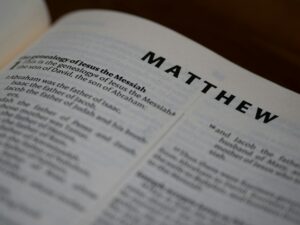
Nestorius’ teaching came under scrutiny when he declared that Christians should not speak of Mary as the “God-bearer” (p. 55). Many modern Protestants would also be uncomfortable with this language in response to the veneration of Mary that goes too far. Hames helpfully points out, however, that the title comes directly from Matthew 1:23 “‘Behold, the virgin shall conceive and bear a son, and they shall call his name Immanuel’ (which means ‘God with us’)” (ESV, emphasis added) and was meant to say who Jesus is more than who Mary is. The child born of Mary is God himself (p. 54).
Nestorius’ objection to the phrase had nothing to do with who Mary was. His concern was to keep the divine and the human separate in Jesus Christ (p. 58). We know from Matthew 1:23, and other similar verses, that Jesus Christ is the God-man. As the Nicene Creed affirms, he is “true God from true God” who “for us and for our salvation…became incarnate by the Holy Spirit and the virgin Mary, and was made human.” We also know that Christ’s two natures are a great mystery. How can one person be truly divine and truly human and still really be one person?
Nestorius, however, did not believe this was a mystery; he believed it was impossible. He did not think of Jesus Christ as one real person with two natures, but rather as two separate realities hiding behind a facade (p. 72). Following those who had taught him, Nestorius spoke of Jesus as “a man enjoying a unique relationship with the Son” (p. 69). Nestorius was unwilling to say that the human Jesus Christ was God, but that Jesus and the Son were “two separate personal subjects who had agreed to cooperate for a time” (p. 70).
Cyril, and most of the Christians around Nestorius, were able to see that this teaching undermined the doctrine of the incarnation and the entire gospel. Unless Jesus “is none other than God the Son come down to save humanity” (p. 73), there is no good news. Nestorius’ Jesus, who is not God come down to us, but a man who cooperated with God’s Son, can never be a saviour for helpless humanity, but rather only “a champion raised up from among us as an example to be followed” (p. 72). In fact, Hames helpfully shows that the Nestorian conception of Jesus fit well with the conception of humanity taught by another group of heretics operating in the Western Roman Empire around the same time—the Pelagians, who did not believe in original sin or human depravity, but simply that humans had to choose to obey God (p. 124-128).
Hames gives us a fascinating account of Cyril’s involvement in the controversy, first through personal correspondence with Nestorius (p. 56-59), and finally, by leading the tumultuous Council of Ephesus in 431 AD, which ended with Nestorius and his teaching being condemned (p. 79-85). Once again, historians have often painted the events of this council in various lights, often with Cyril as a bully, forcing his view of Jesus on the church and marginalizing Nestorius’ equally legitimate view (p. 62-65). Hames examines the historical evidence and gives us a clear picture of a flawed but brilliant man—a man who had been tempered by past mistakes, but still had a forceful disposition—who defended orthodox Christian doctrine from false teaching.
Conclusion
History is never simple. God uses flawed, sinful people to accomplish his purposes in the world. This should not lead us to excuse what we can clearly see is wrong, but to be humble as we learn from the past, knowing that we, too, need God’s grace as we fulfill our roles in his world. Cyril of Alexandria may not be a hero, but he is a man we need to know about because he pointed us to the truth about the One who is the true hero of humanity, Jesus Christ, the Son of God.