


On January 27, 2018, I (Caleb) returned home intrigued. It was the first class of my Master of Divinity degree. It was a course on Baptist history and thought taught by Professor Michael Haykin. I had previously heard that he was a world-class historian but did not expect his lectures to be so riveting.
As my wife collected the details from me in our regular evening debrief, one of the first things out of my mouth was something to the effect of, “Dr. Haykin talked at length about the history of the colour pink!” I was fascinated, my interest piqued.
It is true. During that class, Dr. Haykin had lectured about the significance of colour for an extended period of time. A colour having historical or theological significance was something I had never thought about before. I was amazed both that someone was thinking along these lines and that Dr. Haykin had convinced the class of the importance of colour in history and as an important topic of study and scholarship.
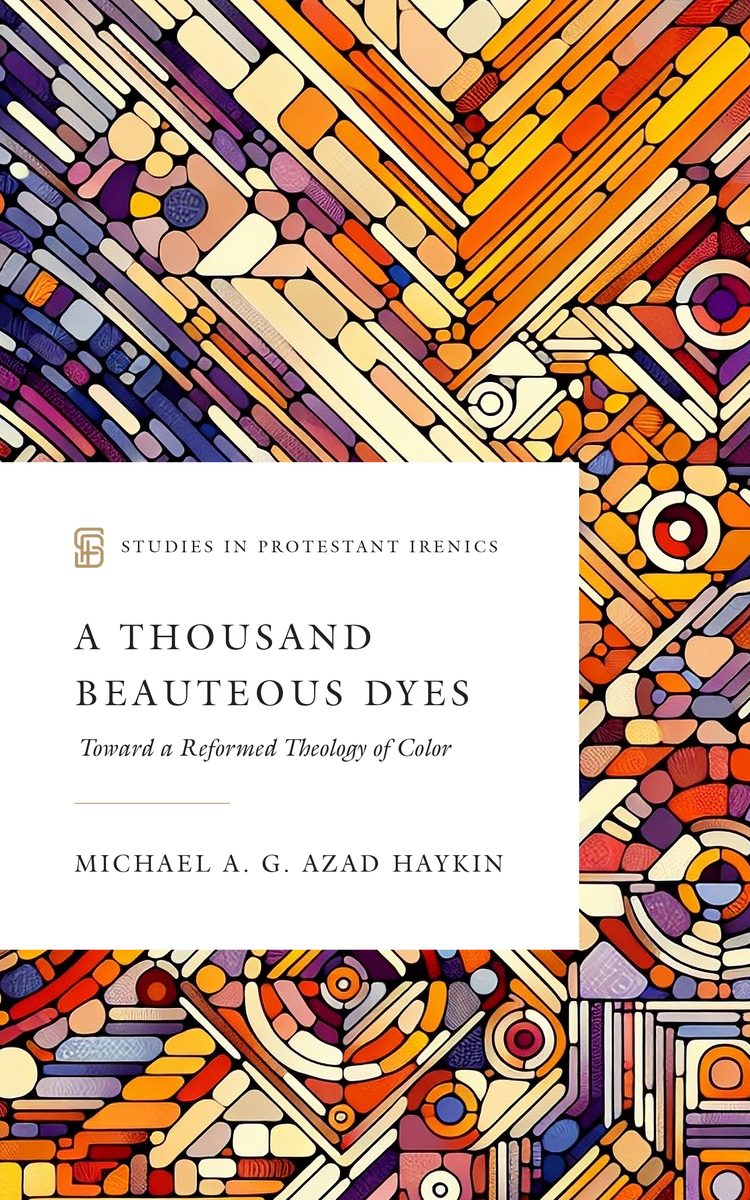
A Thousand Beauteous Dyes: Toward a Reformed Theology of Color
Michael A. G. Azad Haykin
Purchase at the Davenant BookstorePurchase on Amazon.comPurchase on Amazon.caA Thousand Beauteous Dyes: Toward a Reformed Theology of Color
Michael A. G. Azad Haykin
In subsequent classes with Dr. Haykin, even though I learned to expect these fascinating vignettes, I was always amazed at the subjects he brought to our attention—the history of gardens, architecture, publishing, and so much more. These were valuable bits of information that contributed to a broader view of the importance of Christian scholarship.
Christian scholarship matters because it trains Christians to slow down and pay attention. How often is our initial assessment of a matter unhelpful because we have rushed to a conclusion without slowing down to ask the right questions? The church needs men and women devoted to research and writing to help us slow down and appreciate the glory in the details. Scholars help us understand a subject, theme, doctrine, or phenomenon accurately and thoroughly rather than making assumptions or failing to see the glory of the matter in full.
A Thousand Beauteous Dyes (Davenant Press, 2026), part of the Davenant Institute’s Studies in Protestant Irenics series, calls readers to acknowledge the significance of colour in the writings of select Reformed theologians. In four essays, the book exhorts its readers to contemplate “the aesthetic sphere of human existence” (2). The authors cited in the book share a consensus that the multitude of shades which colour our world and are traced throughout Scripture tell us something about God’s character and ways.
The first chapter features the colours red and pink. Readers will discover why Richard Sibbes (1577–1635) viewed pink as the pinnacle of the colour range and why John Owen (1616–1683) saw pink as the colour of the incarnation.
In the second chapter, readers will worship alongside Anne Steele (1717–1778) as she highlights the praise believers ought to render to God as they behold the chromatic excellence of his creation. Steele’s poetry is gripping, stirring up grand thoughts of worship as the glory of creation is vividly described in her hymnody and poetry. It is impossible to read this chapter without Psalm 19:1–2 coming to mind: “The heavens declare the glory of God, and the sky above proclaims his handiwork. Day to day pours out speech, and night to night reveals knowledge.”
The book’s title is drawn from Steele’s poem, “Ingratitude Reproved”, where she rebukes our human tendency towards ungratefulness, pointing to the glory of God displayed in the beautiful array of colours in creation.
Chapter three draws attention to Benjamin Beddome’s (1717–1795) repeated use of crimson in his hymnody and the colour white in a sermon on Revelation 7—the vivid imagery of robes made white by the blood of the Lamb. Haykin’s analysis of Beddome’s chromatic contribution is useful because it advocates for attentiveness to biblical imagery in the liturgy and preaching of the church. Colour is important in congregational worship for it communicates gospel truth about our redemption, cleansing, and glorification.
In the final chapter, Haykin describes Jonathan Edwards’ (1703–1758) fascination with the colour green. For Edwards, it is the colour of cheerfulness, bringing delight to the human heart. Edwards writes of the “hidden”1 beauty of light and colours which in their perfect complexity bring us delight in ways we don’t always understand. Edwards reminds us that delight in creation is more than simply pleasing sights, but truly “the emanations of the sweet benevolence of Jesus Christ.”2 The theological ruminations of Edwards are worth reflecting on.
The value of this book is wrapped up in its call to contemplate that which is all around us. Colour should cause the Christian to worship the Triune God and remember all that he has done through the precious blood of his Son, the Lord Jesus Christ.
The many hues of green displayed in the vegetation all around us should inspire praise. The crimson tide of Christ’s blood, shed on the cross for the redemption of sinners, should evoke thankfulness. The anticipation of robes made bright with the righteousness of Christ should spur us on in the daily pursuit of holiness.
Pastors seeking to intentionally incorporate beauty into their church’s liturgy will profit from this book. Christians will find that this volume cultivates necessary reflection and worship as they gain a greater appreciation for God’s exquisite colour palette. In the end, while it may only take readers two or three hours to read this slim volume, it will take readers far longer to meditate on the glory of God’s wondrous creation.
1 Jonathan Edwards, “Beauty of the World” in his Scientific and Philosophical Writings, ed. Wallace E. Anderson, The Works of Jonathan Edwards, vol. 6 (New Haven: Yale University Press, 1980), 306.
2 Jonathan Edwards, “Miscellany 108” in his The Miscellanies (Entry Nos. a-z, aa-zz, 1-500), ed. Thomas A. Schafer, The Works of Jonathan Edwards, vol. 13 (New Haven: Yale University Press, 1994), 278–279.