





This is the first article in our new Series: Revivals Across Canada. See here for the Series intro.
It has been said that Canada, unlike the United States to the south, has never experienced a nationwide revival. While this is true, there have been local awakenings from time to time that have had considerable impact. This series of articles aims to reintroduce these important stories to the Canadian church. The earliest example is probably that which took place at Conception Bay, Newfoundland, in the late eighteenth century.
Newfoundland in the Eighteenth Century
Newfoundland society in that era revolved around cod fishing in the Atlantic. The boats used had been outfitted by British merchants and employed fishermen from Ireland, southwest England, western Scotland, and the Isle of Jersey.
Almost the entire population of Newfoundland, around 10,000 at the time (the summer population was double that number), consisted of these fishermen and was largely male. Women made up less than a third of the colony. The governor from 1764 to 1768, Sir Hugh Palliser, actually wanted to discourage permanent settlement and make Newfoundland merely a migratory fishery.
There was, therefore, little formal political life, and an utter carelessness about morals and manners ruled. The fishermen would work all through the long summer days and then be sodden in drink most of the winter. The Church of England had three clergymen in the colony, but they seemed to have little impact on the rough fisher folk.
Laurence Coughlan
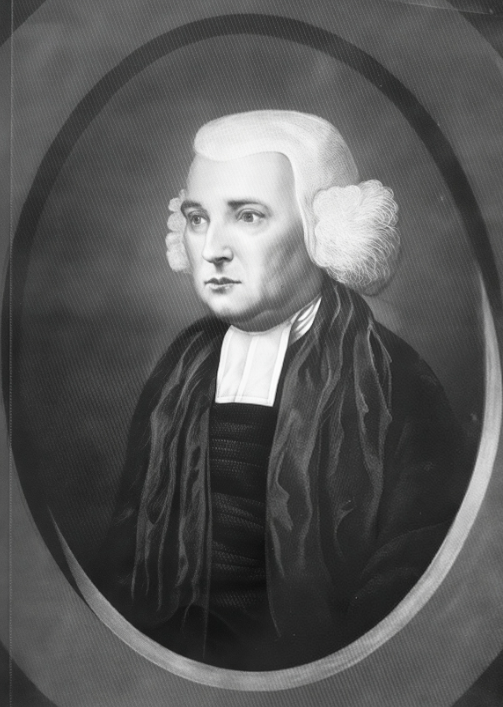 So it was in the providence of God that in the summer of 1766, Laurence Coughlan (d. 1784) came to Newfoundland. A convert to Evangelicalism from Irish Roman Catholicism, he was a “charismatic and sympathetic personality” who was also fiery and fastidious, to quote the words of Patrick O’Flaherty. He had been converted in his native Ireland through Methodist preachers and in 1755 Coughlan became a Methodist preacher himself.
John Wesley (1703‒1791), the leader of the Methodists, initially thought very highly of Coughlan as a preacher. In 1764, though, there was a parting of the ways between Coughlan and Wesley, and the former left the Methodists to become an Independent or Congregationalist minister. He sailed in April of 1766 for the colony of Newfoundland with his wife Anne and their daughter Betsey.
Over the next few years—he left Newfoundland in the autumn of 1773—he exercised a ministry remarkably blessed by God. Because he was a native Gaelic speaker, he could preach to the Irish fishermen in Newfoundland, who comprised just under half of the colony’s population. He hoped his preaching would make them see “the errors of Popery.”
Three years after his coming to Newfoundland, he wrote to supporters in London, England:
Like many other effective Methodist ministers, Coughlan preached a heartfelt Christianity and the urgent need for conversion. He organized small-group meetings where new converts could be encouraged in their Christian walk, as well as doing house-to-house evangelism. He later noted in a 1772 letter to Wesley (see the appendix below for a longer excerpt) that his “preaching in this land would do but little good, were it not for our little meetings.”
The Newfoundland Revival
The result was a profound revival. It is noteworthy that ministry during the winter saw the greater spiritual harvests since it was in the winter that the fishermen were land-bound and therefore a captive audience, as it were. Many of those who were converted had been addicted to alcohol. Conversion enabled them to break from their alcoholism and find a meaning for living for the first time in their lives.
As with every genuine revival, men and women had their lives turned upside down and new passions and loves began to rule their hearts: love for God and for Jesus Christ, love for the Bible and for the people of God.
Personal testimonies of what God did in the lives of these men and women still exist in the form of letters written to Laurence Coughlan. They give us a marvellous insight into the work of God’s Spirit during this revival. The only frustration is that a later editor has reduced all of the names simply to the initials of the persons concerned—actually a frequent device in the eighteenth century.
First-Hand Testimonies
The following are a few first-hand testimonies from those who experienced the revival.
A man whom we know only as J.B. later told Coughlan that he listened to his preaching for two years before he saw the truth of what was being said from the pulpit. It was when he was laid low by sickness that God’s Word became real to him. “Death stared me in the face, and all my former sins came to my remembrance,” he said. “I then saw my need of a Saviour.” God showered his grace upon him, and “my soul,” he said, was “filled with the love of Jesus.”
Another man—known as J.S.—sat under the preaching for three years before the Word made any impact upon him. But when it did, he suddenly saw his guilty state one day while sitting in his home. “I saw the load of guilt which bowed down my soul.” For three whole days he was in “pain and distress of soul.” But after three days, he believed Christ spoke peace and pardon to his soul. He, like J.B., was now “full of love,” and though he still struggled with what he called “this vain, foolish World,” he knew himself to be kept by God.
A woman over 70 years of age and whose initials were M.M. was amazed that God would save her when she was 70 years old. She had gone to speak with Coughlan about her spiritual state and had him pray for her. She left his house, though, with no sense of being forgiven her sins. On the contrary, she walked to her own home “heavy and dejected.” But before she reached the doorstep of her home, “it pleased the Lord to shine upon my soul, and I was suddenly filled with joy and peace in believing.” “Oh!” she exclaimed, “how shall I praise the God of my salvation?”
Another woman, who is known to us only as M.P., confided that she had wrestled with deep fears that her conversion was a delusion. For nearly six weeks these fears gripped her mind and soul. Then God gave her what she called “full assurance of faith.” Now, she said, she could sing that great hymn of the English Baptist Robert Robinson (1735‒1790):
Oh! to grace, how great a debtor,
Daily I’m constrained to be;
May that grace, still, like a fetter,
Bind my wandering heart to thee.
Further Reading
For those who desire to read further on this revival, consult:
- Laurence Coughlan, An account of the work of God in Newfoundland, in a series of letters (London, 1776).
- Hans Rollmann, “Laurence Coughlan and the Origins of Methodism in Newfoundland” in The Contribution of Methodism to Atlantic Canada, ed. Charles H. H. Scobie and John Webster Grant (McGill-Queen’s University Press, 1992), 53‒78.
- Patrick O’Flaherty, “Coughlan, Laurence” in Dictionary of Canadian Biography, vol. 4, University of Toronto; Université Laval, 2003–; accessed August 10, 2026.
Appendix: Excerpts from a letter from Laurence Coughlan to John Wesley
Harbour Grace, Newfoundland, Nov. 4, 1772,
Rev. Sir,
I bless God, my poor labours in this land have been attended with some little success: some precious souls are gone to glory, and a few more are walking in the fear of the Lord, and in the comforts of the Holy Ghost.
I am now in the seventh year of my servitude as a missionary, at the end of which I hope to return to England. Could I travel up and down in this land, so as to be useful any longer, I would gladly stay; but, as I cannot, except by water, in small boats, I am not able to stand it.
I am, and do confess myself, a Methodist. The name I love, and hope I ever shall. The plan which you first taught me, I have followed as to doctrine and discipline. Our married men meet apart once a week; and the married women do the same. This has given great offence, so that repeated complaints have been made to the governor. But truth is mighty, and will prevail.
In winter, I go from house to house, and expound some part of God’s Word. This has also given great offence; ‘but God is above men, devils, and sin.’ The society [The Society for Propagating Christian Knowledge], I make no doubt, have many complaints against me; but in this I shall commit all to God, for I am conscious to myself that what I do is for the glory of God, and the good of souls. We have the sacrament once a month, and have about two hundred communicants. This is more than all the other missionaries in the land have; nor do I know of any who attend our sacrament, who have not the fear of God, and some are happy in his love. There are some also whose mouths God hath opened to give a word of exhortation. I hope he will raise up more … My preaching in this land would do but little good, were it not for our little meetings …
Your dutiful son in the gospel,
L. Coughlan